India Ink: A Conversation With: Human Rights Activist Binayak Sen

Binayak Sen, 62, is no ordinary doctor. Few doctors, after all, spend three decades working in a region threatened by what Prime Minister Manmohan Singh called the “single biggest internal security challenge ever faced” by the country. And that was before Dr. Sen was jailed on charges of “waging a war against the state,” which prompted a group of Nobel laureates to petition for his release.

Dr. Sen was released in 2009, after spending two years in jail, but still faces charges of supporting the Maoists, also referred to as Naxalites, which he denies.

The Maoists have been leading an armed movement to capture political power in 13 states in India over four decades, and claim to be fighting for the poor, dispossessed and marginalized. Dr. Sen ran mobile clinics in the interior of Chhattisgarh, one of the states most affected by the Maoist insurgency. In 2005, he led a 15-member team that published a report criticizing the Salwa Judum, which  Human Rights Watch calls “a state-supported vigilante group aimed at eliminating Naxalites.”

The Chhattisgarh state government alleged that his work, and in particular his association with the Maoist leader Narayan Sanyal,  amounted to helping wage “a war against the state.” Although that charge was dismissed, he was found  guilty of sedition and conspiracy, and sentenced to life imprisonment by a lower court in Chhattisgarh in 2010. He was granted bail by the Supreme Court in 2011 and an appeal against the conviction is pending in the Chhattisgarh High Court.

A group of 40 Nobel laureates described him as “an exceptional, courageous, and selfless colleague, dedicated to helping those in India who are least able to help themselves,” in a 2011 letter appealing for his life sentence to be overturned.

India Ink had several conversations with Dr. Sen, both over the phone and e-mail, to discuss how human rights activism grew from his work as a doctor.

Describe your journey from being a doctor in rural areas to being labeled a Maoist sympathizer.

My work in Chhattisgarh was with village communities, some of the poorest in India, and training health workers to look after their needs. Earlier, I had helped establish a hospital for mine workers in the area. As a logical outcome of my work, I was involved with human rights work, and was the general secretary of the state unit of the Peoples’ Union for Civil Liberties.

In this capacity I was instrumental in documenting and exposing deaths due to hunger and malnutrition, and to the displacement of over 600 tribal villages by the state-sponsored militia called Salwa Judum, or S.J., in southern Chhattisgarh. Last year, the S.J. was banned by the Supreme Court of India.

But it was in 2007 that I was labeled a Maoist supporter, for reasons best known to the Chhattisgarh state government. I was arrested in 2007 and charged with sedition, as well as under internal security acts, spent two years in jail during the trial, was released on bail by the Supreme Court,  convicted and sent to jail again, before again being released on bail in 2011. My appeal against the conviction is still pending in the state high court.

What was your association with the Maoist leader Narayan Sanyal?

I was approached by Narayan Sanyal’s family to help him with his legal cases and his health needs. In my capacity as a P.U.C.L. activist, I visited him in jail several times in the presence of senior jail officials, as they testified at my trial.

Could you tell us about your time in prison?

My time in prison was a time of deep despair, as I was unable to figure out the logic of the juridical action against me. At the same time it gave me an opportunity to know the stories of many fellow prisoners who were undergoing the same trauma as myself.

I came across many such instances where people had spent substantial amounts of time and were later let go. In some instances the judges have indicted the police for fabrication of evidence and illegal detention, but nothing has happened.

I did not do anything that was, to the best of my knowledge, wrong or illegal.  I didn’t expect anything like this happen to me; I had in fact worked with the government to provide essential services in these areas. After coming out of jail, I have been part of a nationwide process for the repeal of unjust and oppressive laws.

There was no physical intimidation that I faced in jail. However, I was kept in solitary confinement. Life in jail is itself a form of mental intimidation.

Do you consider yourself fortunate that you received a great deal of media attention when you were arrested?

I faced a virulent media trial in Chhattisgarh in the print and electronic media, as well as on the Internet. The ordinary journalist in Chhattisgarh relies to a large extent on government (including police) handouts. It was the contribution of dedicated national journalists who turned their spotlight on the real story.

It was only over a period of time that a campaign against the patent injustice in my case built up, and many prominent citizens at the national and international levels besides sections of national media took a positive view about me.

What is your understanding of the Maoist problem in India? Does their use of violence overshadow the issues they are fighting for?

It is surprising that so much of the public discourse is about the issue of violence. Large sections of the population in the “affected areas” are living in a state of perpetual hunger, to the point of famine, and lack appropriate and basic health care. Their access to common property resources, essential for their survival, is denied to them as a result of state action, to a point where the very survival of entire communities is called into question – but this does not become the center of the discourse.

I have clarified on many occasions that I do not condone the violence either of the agencies of the state or of those who oppose the state.

You were recently part of a conference called “Resist the Silent Emergency” in Delhi; what is the “silent emergency” in India?

The conference to which you refer was mainly devoted to documenting and chronicling widespread fabrication of cases and the use of sedition-like laws to suppress dissenting voices across the country. The silent emergency refers to the suppression of fundamental rights to freedom of thought and expression, without the declaration of an actual internal emergency as in 1975.

You have spoken about the need to establish alternative agencies and systems. What has given rise to the need?

First of all, I want to clarify that I have always engaged with the state to help it function better. I was recently part of the steering committee for health in the 12th five-year plan, and earlier part of the advisory group on structural reforms in health care for government of Chhattisgarh.

However, recent developments make it plain that the planning commission is unlikely to carry out its stated commitments to the universalization of health care. The alternative strategies that most public health workers are advocating, is the universalization of health care and for increased resource allocation in the health and nutrition sector.

Some suggest we need to involve international bodies in improving health care. Does that signal a lack of faith in the country’s own systems of checks and balances?

The distress due to chronic hunger, lack of health care and widespread displacement of the people, who constitute one sixth of mankind, cannot be constrained only by questions of national identity. These are matters of concern for the entire world community.

(This interview has been lightly edited and condensed.)

Read More..

Tim McGraw and Faith Hill Kick Off Special Series of Las Vegas Shows


12/09/2012 at 05:00 PM EST


Tim McGraw and Faith Hill


Denise Truscello/WireImage


Tim McGraw and Faith Hill looked at each other, their hands on each others knees and shared a passionate kiss just after midnight Sunday morning.

The moment was a long time coming – it capped off their first weekend as a Las Vegas headlining act.

Earlier in the 90 minute show, McGraw told the crowd at the Venetian that he and his wife were going to "have fun tonight" and it genuinely seemed like they did, singing with each other for several songs while still letting the other perform their solo hits. Though the show – called the Soul2Soul series – is technically not the same "residency" show Las Vegas is known for, the couple will perform for 10 weekends through April.

At a press conference several months ago, McGraw and Hill promised a "personal" show, and they delivered in a big way. In fact, it got very personal as McGraw complimented his wife on her flowing black dress, saying, "It's gonna look good on the floor later."

The duo also took a moment to sit down and speak with the crowd. Though they didn't field any questions, they spoke about the most common questions they get asked. "We always get asked what was the music we heard first, who influenced us," Hill said.

Rather than answer it, the duo then sing a few of their main influences – Hill sang George Strait; McGraw sang The Eagles.

"I love doing other people's music, better than my own," McGraw joked.

With few bells and whistles, the show puts the focus squarely on it's two superstars, and considering the rousing ovations McGraw and Hill received Saturday, that's perfectly fine with their fans.

Read More..

Shares crawl higher as China, U.S. data brighten outlook

SINGAPORE (Reuters) - Asian shares touched a 16-month high on Monday as investors took heart from rising factory output growth in China and a falling unemployment rate in the United States that raised hopes about the outlook for the world's top two economies.


The positive mood was tempered by Chinese trade data that saw both exports and imports come in below forecasts, but equities and commodities such as copper and oil remained in the black. European shares were seen opening flat-to-higher.


"At this point, bad data is not as much of a surprise for the market as good data is," said Christian Keilland, head of trading at BTIG in Hong Kong.


The euro was under pressure, having been knocked by the prospect of a recession in Germany and political uncertainty in Italy after Prime Minister Mario Monti, an investors' favorite, said at the weekend he intended to resign early.


MSCI's broadest index of Asia Pacific shares outside Japan <.miapj0000pus> inched up 0.2 percent and Tokyo's Nikkei share average <.n225> firmed 0.1 percent.


Financial spreadbetters called London's FTSE 100 <.ftse>, Paris's CAC-40 <.fchi> and Frankfurt's DAX <.gdaxi> to open up about 0.1 percent. <.t><.l><.axjo/>


The MSCI index rose more than 1 percent last week, its third successive weekly gain, taking it to levels not seen since early August 2011. There was a further boost for regional markets on Sunday when China reported a November pick-up in factory output and retail-sales growth to eight-month highs.


However, data released by China on Monday showed exports rose in November at a much weaker pace than expected, while imports were flat.


"The export slowdown shows external demand faces uncertainty due to concerns over the fiscal cliff in the US," said Zhang Zhiwei, chief China economist at Nomura in Hong Kong. "Nonetheless it does not change our view that growth is on track for a strong recovery in Q4, as (growth) is mostly domestically driven."


On Wall Street, the Dow <.dji> and S&P 500 <.spx> had risen modestly on Friday after an unexpected fall in the U.S. jobless rate. S&P 500 futures were flat on Monday. <.n/>


MARKETS WATCH ITALY


In Europe, investors will be hoping the weakness in external demand evident in the Chinese export number is not a pointer for German trade data due later on Monday.


The euro slid in early trading towards a two-week low of $1.2876 plumbed on Friday, before popping back above $1.29. Investors had sold the euro after Germany's central bank on Friday warned that the euro zone's biggest economy could soon enter recession.


Italian Prime Minister Monti's surprise announcement at the weekend came a few days after former Prime Minister Silvio Berlusconi abruptly withdrew support for Monti's technocrat government, formed over a year ago in an effort to restore Italy's credibility with investors.


"If Monti's pro-euro stance is to back off, that should raise concerns about the euro," said Junya Tanase, chief currency strategist at JPMorgan Chase in Tokyo.


Italian bond yields will be closely watched on Monday. The 10-year yield, the main barometer of investor confidence, stood at 4.5 percent at the end of last week, 323 basis points higher than the yield on the lower risk German equivalent but well below the 7.3 percent peak hit last year, when the spread over German Bunds hit 550 points.


The U.S. dollar rose about 0.3 percent against a basket of major currencies <.dxy>.


Commodity markets were also generally firmer, with copper, which draws strength from expectations of Chinese industrial demand, rising 0.9 percent to around $8,105 a metric ton (1.1023 tons) and oil rising around 0.5 percent.


Brent crude traded around $107.60 a barrel and U.S. crude fetched about $86.40.


"Investors are slightly more optimistic about China's economic recovery than before and that is supportive for oil," said Ken Hasegawa, a commodity sales manager at Newedge Japan.


The easy outlook for monetary policy continued to support gold, with the U.S. Federal Reserve expected to signal this week it will continue to pump money into the economy in 2013. Also, there was talk of a possible rate cut next year by the European Central Bank.


Spot gold firmed 0.2 percent to around $1,707 an ounce.


(Additional reporting by Thuy Ong in Sydney and Manash Goswami in Singapore; Editing by Richard Borsuk)


Read More..

Somber Chávez to Have Surgery and Names Successor


Marcelo Garcia/Miraflores Press Office, via Associated Press


President Hugo Chavez of Venezuela, center, announced Saturday in a speech that his cancer had returned. Diosdado Cabello, president of the National Assembly, left, and Vice President Nicolás Maduro appeared with him.


ORURO, Bolivia — President Hugo Chávez of Venezuela announced Saturday in Caracas that he would have to undergo another operation for cancer, and he designated his vice president, Nicolás Maduro, as his successor if he should prove unable to continue to lead the country.


Mr. Chávez, appearing somber and contemplative, made the announcement in a televised address from the presidential palace. Mr. Maduro sat to his left, and several other cabinet members were also present.


It was the first time that Mr. Chávez had said publicly whom he wanted as his successor. Mr. Chávez said that he would fly to Havana on Sunday for the operation. The announcement came just weeks after he was elected to a new six-year term, beginning in early January.


He said Saturday that tests immediately after his re-election found no cancer. But he said he later experienced swelling and pain. He went to Cuba on Nov. 27 for what the government said was hyperbaric treatment meant to aid in healing.


Exhaustive tests at the time found “some malignant cells,” Mr. Chávez said.


“With the favor of God, as on the previous occasions, we will be victorious,” he added.


But he acknowledged the possibility that he may not be able to continue as president or begin his new term. If he is unable to do so, the Constitution says that new elections would have to be called within 30 days.


In that case, he said, “my strong opinion, as clear as the full moon, irrevocable, absolute, total” is that “you should elect Nicolás Maduro” as the new president.


“I ask it from my heart,” he added.


Mr. Chávez said that he was in a significant amount of pain and that his doctors had urged him to have the operation no later than Friday, but he had insisted on postponing it so that he could return briefly from Cuba, where he had been undergoing medical treatment. He flew back to Caracas on Friday.


Mr. Chávez first received a cancer diagnosis in June 2011. He had surgery and chemotherapy, but in February he said the cancer had returned. He then had another operation, followed by radiation treatment.


He has refused to say what kind of cancer he has, or exactly where in his body it had appeared.


Mr. Maduro is a former bus driver and legislator who has served for years as Venezuela’s foreign minister.


Read More..

7 Apps You Don’t Want To Miss


Twitterific


Twitter client Twitterific released version 5 of its iOS app this week. Overhauled and redesigned, the updated app has a new customizable user interface, gesture support, and the ability to sync timeline positions between several different devices.


Click here to view this gallery.


[More from Mashable: Google Now Updated With Boarding Passes, Improved Voice Search]


It can be tough to keep up with all the new apps released every week. But you’re in luck — we take care of that for you, creating a roundup each weekend of our favorite new and updated apps.


This week a popular mobile photo editing app for iOS finally made its way to Android, and a hot email app for iOS saw a huge update.


[More from Mashable: Chihuly App Brings Glassblowing To The iPhone]


We found an app that lets you create virtual glass art projects with your iPhone, and an app for Android that lets you find and purchase art projects that others have created.


Check out the gallery above for a look at this week’s app highlights.


If you’re still looking for more, check out last week’s Apps You Don’t Want To Miss.


Think we left a great new app off the list? Let us know in the comments below.


Photo courtesy iStockphoto, scanrail


This story originally published on Mashable here.


Tech News Headlines – Yahoo! News


Read More..

Michelle Branch's Daughter's Dream Job Is For the Birds - Literally


Celebrity Baby Blog


12/03/2012 at 02:00 PM ET


Prince William and Kate Expecting First Child
Sthanlee B. Mirador/Shooting Star


It seems as if Michelle Branch‘s daughter won’t be following in her musical footsteps any time soon.


While the Grammy Award winning singer/songwriter and her husband, bass player Teddy Landau, are no strangers to the stage, 7-year-old Owen Isabelle has found her niche in nature.


“I think because my husband and I are both musicians, she kind of feels like she has to do something a little bit more serious than her mom and dad,” the Cook Taste Eat host, 29, tells PEOPLE.


“Since she was 3 or 4 years old, she was always into science and dinosaurs and watching nature shows.”


In particular, all-things aviary has struck a chord with the little girl, who has already happily declared her future dream job.

“She’s obsessed with birds. She’s been begging to have a pet bird, which I will not allow,” saya Branch. “[Owen] claims she’s going to be an ornithologist when she grows up. Literally, it’s birds 24/7 — every book she wants is birds, stickers, drawings, clothes, everything.”


And as sure as she is of her pending career plans, Owen is just as confident in her political views. Happy to reveal who would have earned her support, the little girl has no qualms about divulging the deciding factor during the recent Presidential election.


“Around election time she said, ‘You know Mom, if I could vote, I would vote for Barack Obama.’ And I said, ‘Oh, really, that’s so interesting. Why?’” Branch recalls.


“And she said, ‘Well, remember that one time we got to go to the White House and meet him? I don’t vote for strangers.’”


');var brightcovevideoid = 1995568442001
');var targetVideoWidth = 300;brightcove.createExperiences();/* iPhone, iPad, iPod */if ((navigator.userAgent.match('iPhone')) || (navigator.userAgent.match('iPad')) || (navigator.userAgent.match('iPod')) || (location.search.indexOf('ipad=true') > -1)) { document.write('
Read More..

World Briefing | AFRICA: Uganda: Oil Industry Regulations Passed


Lawmakers passed legislation on Friday intended to regulate Uganda’s nascent oil industry, but critics say it gives too much authority over the industry to the nation’s energy minister.


The legislation, which has been debated for more than a year, is meant to pave the way for oil production in Uganda.


But Global Witness, a group that highlights the links between the exploitation of natural resources and human rights abuses, said that the new legislation would give the president and his energy minister “total control over the sector” and warned that it would “perpetuate the status quo of secrecy, excessive ministerial control and corruption allegations.”


Uganda is estimated to have enough oil reserves to become a middle-tier oil-producing nation. But its oil industry has been plagued by accusations of corruption and court cases that have delayed the start of production. Pumping is now expected to begin in 2014, industry officials say.


Read More..

New Sony online store offers remote downloads to PlayStation and mobile devices


Read More..

Susan Powell's Father-in-Law Secretly Took 4,500 Pictures of Her


12/07/2012 at 07:30 PM EST


Wrapping up a year that has brought unimaginable frustration and heartbreak, Susan Powell's family marked the three-year anniversary of her disappearance at a ceremony this week near where her two sons are buried.

"It's a hard time of year," Susan's father, Chuck Cox, tells PEOPLE. "Our daughter's still missing. Someday, we will find out what happened to her."

He added that he is not sure what to make of a West Valley City, Utah, police announcement Thursday that their investigation into Susan's Dec. 6, 2009 disappearance remains active but "has been scaled down," with a reduction in the number of full-time investigators working the case.

The announcement came at the same time that more evidence emerged of the alleged obsession Susan's father-in-law, Steven Powell, had toward her. Authorities released nearly 4,500 pictures that they say he secretly took of her at home and elsewhere.

Cox says he's hopeful that the police are still doing everything possible to solve Susan's case, but he hasn't ruled out suing the department for failing to arrest Susan's husband, Josh Powell, for her murder.

More than two years after Susan's disappearance, Josh on Feb. 5 murdered the couple's two sons and committed suicide by blowing up his house.

Cox's lawyer, Anne Bremner, says Cox "goes back and forth" over whether to sue West Valley City. "He wants them to find her. A lawsuit can have a chilling affect on things."

Cox and Bremner say they do plan to file a lawsuit against the state of Washington for continuing to give Josh visitation with his children despite what they claim were mounting concerns regarding his mental stability.

Although Cox and the police believe that Josh Powell knew more than anyone what happened to Susan, they also strongly suspect that his father, Steven Powell, should still be looked at more closely.

Susan Powell's Father-in-Law Secretly Took 4,500 Pictures of Her| True Crime, Susan Powell

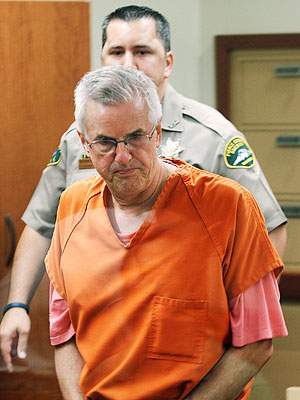
Steven Powell

Ted S. Warren / AP

The Coxes hoped Steve Powell's voyeurism trial in May would unearth some answers but it did not. Powell invoked his Fifth Amendment right against self-incrimination when asked in jail about Susan.

In numerous interviews with PEOPLE, Steve and Josh Powell denied any involvement in Susan's disappearance and have suggested that she ran off with another man.

Steve Powell was prosecuted for surreptitiously photographing his neighbor's young daughters (and is serving a 30-month sentence), but the investigation also unearthed journals in which Powell described his interest in his daughter-in-law, as well as the thousands of photos, which were released Thursday to the Associated Press.

In a journal entry, Steven Powell recalls a sexually charged dream in which Susan asks him, “Do you think I would make a good wife for you?” None of the pictures show Susan naked, although there are images of her crotch and backside.

"We think he knows exactly where our daughter is," Cox says.

Once Susan disappeared, Josh sold the family's home in Utah and moved with the boys into Steven Powell's house in Puyallup, Wash., only about two miles from the Cox family.

On Thursday, families streamed to Puyallup’s Woodbine Cemetery to remember the Powell boys and other children who died tragically and to dedicate a memorial: a bronze angel inspired by the novella The Christmas Box, in which strangers learn the value of love following a child’s death.

The novella's author, Richard Paul Evans, also attended the dedication. The memorial is on a hill overlooking the boys' gravesites 75 yards away.

"We get a lot of support from a lot of people and we're going to make it through," Cox says.

Read More..

Wall Street Week Ahead: "Cliff" worries may drive tax selling


NEW YORK (Reuters) - Investors typically sell stocks to cut their losses at year end. But worries about the "fiscal cliff" - and the possibility of higher taxes in 2013 - may act as the greatest incentive to sell both winners and losers by December 31.


The $600 billion of automatic tax increases and spending cuts scheduled for the beginning of next year includes higher rates for capital gains, making tax-loss selling even more appealing than usual.


Tax-related selling may be behind the weaker trend in the shares of market leader Apple , analysts said. The stock is down 20 percent for the quarter, but it's still up nearly 32 percent for the year.


Apple dropped 8.9 percent in this past week alone. For a stock that gained more than 25 percent a year for four consecutive years, the embedded capital gains suddenly look like a selling opportunity if one's tax bill is going to jump sharply just because the calendar changes.


"Tax-loss selling is always a factor (but) tax-gains selling has been a factor this year," said Paul Mendelsohn, chief investment strategist at Windham Financial Services in Charlotte, Vermont.


"You have a lot of high-net-worth individuals in taxable accounts, and that could be what's affecting stocks like Apple. If you look at the stocks that people have their largest gains in, they seem to be under a little bit more pressure here than usual."


Of this year's top 20 performers in the S&P 1500 index, which includes large, small and mid-cap stocks, all but four have lost ground in the last five trading sessions.


The rush to avoid higher taxes on portfolio gains could cause additional weakness.


The S&P 500 ended the week up just 0.1 percent after another week of trading largely tied to fiscal cliff negotiation news, which has pushed the market in both directions.


A PAIN PILL FROM THE FED?


Next week's Federal Reserve meeting could offer some relief if policymakers announce further plans to help the lackluster U.S. economy. The Federal Open Market Committee will meet on Tuesday and Wednesday. The policy statement is expected at about 12:30 p.m. on Wednesday after the conclusion of the meeting - the Fed's last one for the year.


Friday's jobs report showing non-farm payrolls added 146,000 jobs in November eased worries that Superstorm Sandy had hit the labor market hard.


"After the FOMC meeting, I think it's going to be downhill from there as worries about the fiscal cliff really take center stage and prospects of a deal become less and less likely," said Mohannad Aama, managing director of Beam Capital Management LLC in New York.


"I think we are likely to see an escalation in profit-taking ahead of tax rates going up next year," he said.


MORE VOLUME AND VOLATILITY


Volume could increase as investors try to shift positions before year end, some analysts said.


While most of that would be in stocks, some of the extra trading volume could spill over into options, said J.J. Kinahan, TD Ameritrade's chief derivatives strategist.


Volatility could pick up as well, and some of that is already being seen in Apple's stock.


"The actual volatility in Apple has been very high while the market itself has been calm. I expect Apple's volatility to carry over into the market volatility," said Enis Taner, global macro editor at RiskReversal.com, an options trading firm in New York.


Shares of Apple, the largest U.S. company by market value, registered their worst week since May 2010. In another bearish sign, the stock's 50-day moving average fell to $599.52 - below its 200-day moving average at $601.38.


"There's a lot of tax-related selling happening now, and it will continue to happen. Apple is an example, even (though) there are other factors involved with Apple," Aama said.


While investors may be selling stocks to avoid higher taxes in 2013, companies may continue to announce special and accelerated dividend payments before year end. Among the latest, Expedia announced a special dividend of 52 cents a share to be paid on December 28.


To be sure, the big sell-off in stocks following the November 6 election was likely related to tax selling, making it hard to judge how much more is to come.


Bruce Zaro, chief technical strategist at Delta Global Asset Management in Boston, said there's a decent chance that the market could rally before year end.


"Even with little or spotty news that one would put in the positive bucket regarding the (cliff) negotiations, the market has basically hung in there, and I think it's hung in there in anticipation of something coming," he said.


(Wall St Week Ahead runs every Friday. Questions or comments on this column can be emailed to: caroline.valetkevitch(at)thomsonreuters.com)


(Reporting by Caroline Valetkevitch; Editing by Jan Paschal; Multimedia versions of Reuters Top News are now available for:; 3000 Xtra: visit Reuters Top News; BridgeStation: view story .134; For London stock market outlook please click on .L/O; Pan-European stock market outlook .EU/O; Tokyo stock market outlook .T/O; Wall St Week Ahead runs every Friday.)


Read More..